

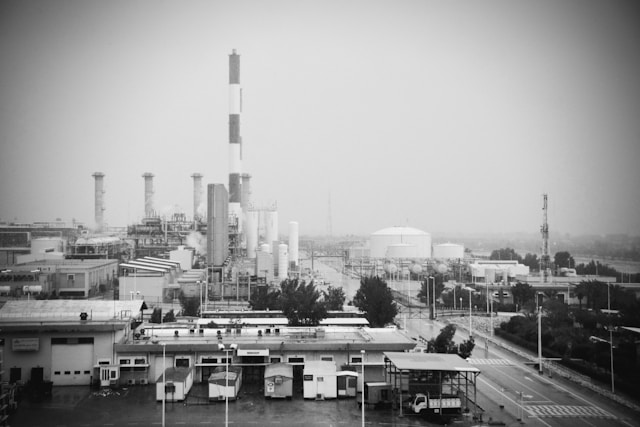
The Iran war that began in late February 2026 after a massive joint military campaign by the United States and Israel has already sent waves through the global economy and the Middle East’s political landscape. With strikes targeting military and strategic infrastructure inside Iran and retaliatory strikes across the Gulf region, the conflict has quickly become more than a conventional military confrontation. It has evolved into a crisis affecting energy markets, Gulf security arrangements, and regional stability in ways that could have long-term implications for the world economy and international relations.
Oil markets are usually sensitive to geopolitical shocks, but the Iran conflict has brought that sensitivity into sharp focus. The Strait of Hormuz, a narrow waterway between Iran and Oman, is one of the most important arteries for global energy supply. Roughly 20 million barrels of crude oil and liquefied natural gas (LNG) pass through this strait each day, making up close to 20 percent of global seaborne energy shipments. Because of its strategic role, any threat to the free flow of oil and gas through Hormuz instantly reverberates worldwide. Economic reports during the conflict show that fears over supply disruptions caused a rise in Brent crude futures, with prices climbing by about 7 percent within days of the fighting’s escalation. These price movements reflect not just actual supply interruption but also traders’ concerns about future disruptions if the Strait is closed or if attacks intensify.
One key reason global energy markets have reacted so strongly is that the war touches directly on infrastructure in the Persian Gulf region where many of the world’s largest oil producers are located. In addition to Iran’s own production, Saudi Arabia, the United Arab Emirates, Kuwait, Qatar, and Iraq heavily depend on secure sea lanes and stable political conditions to export oil and gas. Iran’s retaliation has included targeting not just military facilities but energy installations and shipping routes. For example, Iranian drones struck Qatar’s massive Ras Laffan LNG export complex, forcing production halts and suspension of shipments, which quickly affected global liquefied natural gas markets.
Meanwhile, the closure or disruption of the Strait of Hormuz itself — even temporarily — could trigger a serious energy shock. Analysts note that if Iran were to make a prolonged closure of the strait permanent, global oil prices could spike dramatically, potentially reaching $100 to $150 per barrel or more depending on the duration and severity of the disruption. Such a price level would significantly raise fuel and manufacturing costs worldwide, adding fresh inflationary pressure in economies already struggling with debt and slow growth.
The Gulf states are acutely aware of these risks because their own national budgets and social spending depend on energy revenues. At the same time, the current conflict has already triggered additional costs and anxiety in the region. Airspace closures, military alerts, and uncertainty about the safe passage of oil tankers have pushed insurance premiums for ships transiting Hormuz higher. Higher insurance costs and transport delays could further tighten supply chains and raise the price of oil, refining, and gas products for consumers and industries from Europe to Asia.
Beyond oil prices, the war has placed enormous strain on Gulf security calculations. Historically, the Gulf Cooperation Council (GCC) states — including Saudi Arabia, UAE, Kuwait, Qatar, Bahrain, and Oman — relied on a combination of rich oil revenue and strategic alliances with the United States to maintain regional security. The 2026 conflict has undermined some of these assumptions. Iranian missile attacks have not been limited to military outposts; several GCC countries reported missiles or drones flying over their airspace, pushing their own air defense systems to higher alert statuses and forcing many to reassess their defence planning.
The region’s security architecture now faces pressure not only from traditional threats like Iran’s missile capabilities but also from the diffusion of advanced weapons to non-state actors in places like Lebanon, Iraq, and Yemen. The possibility that these groups could operate with more powerful Iranian backing adds a new unpredictability to Gulf security. In this context, GCC states are being urged to rethink their defence strategies, invest more in their own capabilities, and consider new security partnerships beyond the U.S. umbrella.
These shifts in security strategy are inseparable from concerns about regional stability. The Middle East has long been a hotspot for geopolitical rivalries, but the 2026 conflict between Iran, Israel, and the United States risks widening old divides and creating new ones. Countries that had been pursuing diplomatic or economic cooperation may now find their ties strained under pressure from the ongoing war. For example, routes for regional trade and travel have been disrupted as nations close or restrict airspace and as maritime traffic avoids key sea lanes.
The economic knock-on effects extend beyond energy. Tourism, aviation, and investment flows have been hit as global firms become wary of operating in or near conflict zones. Stock markets in oil-dependent economies have seen volatility, with investors pulling back pending clearer signals on how long the conflict might last and what its deeper impacts will be. In some Gulf economies, consumer prices for goods and services have risen as basic supply chains tighten under wartime conditions and increased transport costs.
Another major concern fueling instability is the potential for the conflict to draw in external global powers. While the United States and Israel are directly involved, other major economies such as China, India, Japan, and European Union nations have significant stakes in Middle Eastern stability because they depend on oil and gas imports from the Gulf. If the war disrupts energy flows or triggers broader military engagement, countries far beyond the region may be forced to take more explicit positions, complicating diplomatic efforts and potentially leading to a wider international standoff.
International diplomatic efforts have indeed intensified amid these developments, with major governments issuing calls for de-escalation and ceasefire, and international organisations warning about the broader geopolitical and economic implications of continued fighting. Yet, these diplomatic signals have been accompanied by conflicting positions, with some states supporting strategic goals like countering Iranian influence, and others emphasising the need for restraint and respect for regional sovereignty.
The war’s impact on ordinary people should not be underestimated. Higher energy prices can quickly translate into increased costs for transportation, electricity, food, and heating for households worldwide. For many emerging economies, already battling inflation and economic hardship, even modest increases in oil and gas prices can slow economic growth and reduce consumer spending, pushing fragile economies toward recession.
In the Gulf itself, the political and social implications of prolonged instability may reshape domestic agendas. Governments that have relied on oil-funded welfare programs might face pressure to cut spending or accelerate economic diversification if energy revenues become less predictable. Some experts believe this conflict could accelerate longer-term transitions away from oil dependence in the region, even as it exposes the vulnerabilities of Gulf economies tied tightly to hydrocarbon exports.
In a broader sense, the Iran war of 2026 is a reminder that energy markets and security are deeply interlinked. When a key supplier like Iran enters open conflict with major powers such as the United States and Israel, the ripple effects are not contained within borders, they spread across continents, affecting markets, governments, and millions of lives. The coming months will reveal whether this crisis heralds a new era of instability or if diplomatic efforts can bring the region back from the brink of broader war. Either way, the lessons about energy security, Gulf alliances, and regional stability will shape global policy debates long after the immediate fighting ends.
Post a comment

0 comments