

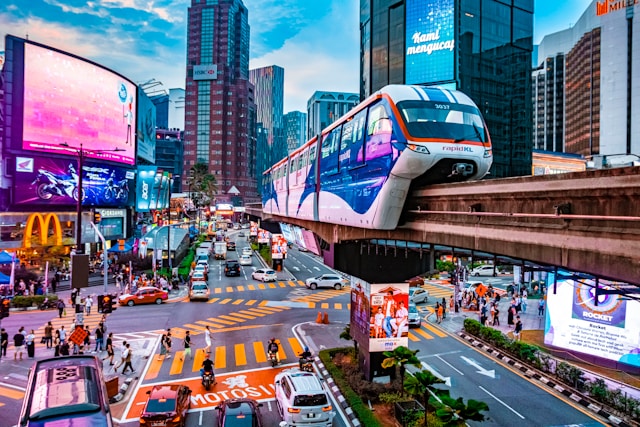
China isn’t just participating in the global technological revolution — it’s leading it. From artificial intelligence (AI) breakthroughs to ultra-connected smart cities, China’s tech ecosystem is evolving at unprecedented speed. In 2025, the country stands at the forefront of innovation, shaping not only its own future but influencing global markets, policy, and emerging technology trends.
In this article, we explore China’s tech race: how AI is transforming industries, what smart cities look like today, and what lies ahead for innovation in the world’s second-largest economy.
China’s AI Revolution: Beyond Hype to Real Impact
Artificial intelligence is arguably the headline technology of the decade — and China has made it a national priority. In 2017, the government released its AI development plan, with the ambitious goal of becoming the world leader in AI by 2030. Today, that vision is rapidly becoming reality.
AI in Everyday Life
AI is no longer confined to research labs. In China, it permeates daily routines:
- Facial recognition for payments and security systems
- Smart assistants embedded in homes and phones
- Predictive analytics in healthcare and financial services
For example, the Baidu AI platform is driving advancements in voice recognition, autonomous vehicles, and even medical diagnostics — with practical applications being deployed nationwide.
Industrial AI Adoption
China’s factories and logistics networks are embracing AI to boost productivity. Smart manufacturing uses machine learning to optimize supply chains, predictive maintenance, and robotics automation — a trend that’s reshaping global production.
A recent report by McKinsey & Company highlights China’s leadership in industrial AI adoption, positioning it behind only the United States in global AI patents and deployment.
👉 Explore more on industrial AI transformation via McKinsey.
Smart Cities: Beijing, Shenzhen & Beyond
If AI represents brains, then smart cities represent the nervous system of China’s tech future — networks of interconnected devices gathering data, optimizing services, and improving urban quality of life.
What Makes a Smart City?
Smart cities leverage data, connectivity, and automation to enhance public services. This includes:
- Intelligent traffic systems that reduce congestion
- Sensors that monitor air quality and water systems
- Smart grids regulating energy consumption
- Digital public services accessible via mobile platforms
China has launched dozens of smart city initiatives, but a few stand out:
📍 Beijing
As the capital and political center, Beijing uses AI and data integration for transportation logistics, emergency response systems, and urban planning. The city’s tech infrastructure helps ease millions of daily commutes with real-time transit tracking and optimized routing.
📍 Shenzhen
Known as China’s “Silicon Valley,” Shenzhen’s tech ecosystem is fueled by giants like Huawei, Tencent, and DJI. Its smart city framework emphasizes IoT (Internet of Things), edge computing, and autonomous systems in ways that rival global peers.
📍 Hangzhou
Hangzhou is championing urban data platforms that support everything from bike sharing to public safety. Alibaba’s involvement has given the city robust AI tools powering smart payments and analytics.
👉 Learn more about smart city planning and tech infrastructure via Smart Cities World.
Connectivity: 5G and the Next Generation Internet
No discussion of China’s tech race is complete without mentioning 5G, which enables faster and more reliable connectivity — essential for AI, autonomous vehicles, and smart city technologies.
China is the largest 5G market in the world, with millions of 5G base stations already deployed. This has accelerated everything from mobile gaming and video streaming to industrial IoT and remote healthcare. According to GSMA Intelligence, China accounts for a significant share of global 5G subscriptions — a figure expected to grow in the coming years.
5G’s role extends beyond speed: it enables the real-time data transmission needed for robotics, telemedicine, and intelligent transportation networks.
Innovation Ecosystem: From Startups to Tech Giants
China’s tech ecosystem thrives on collaboration between government, academia, and private industry. The country has created an environment that fosters rapid iteration and large-scale deployment of new technologies.
Tech Giants Driving Innovation
Some of China’s biggest tech companies aren’t just regional players — they’re global innovators:
- Alibaba — e-commerce, cloud computing, and AI research
- Tencent — social platforms, gaming, and AI-powered services
- Huawei — telecommunications, 5G infrastructure, and chips
- ByteDance — algorithm-driven content delivery and AI personalization
These giants not only compete domestically, but also invest heavily in global R&D, partnerships, and startup ecosystems.
Startup Scene
China’s startup landscape has blossomed over the last decade. Cities like Beijing, Shanghai, and Chengdu are home to hundreds of technology startups focused on AI, biotech, cleantech, and fintech. Venture capital is flowing into innovative ideas, and entrepreneurs are encouraged by both private investment and government incentives.
Tech + Society: Policy and Ethics in Innovation
China’s rise as a tech powerhouse brings scrutiny — especially in areas like data privacy, algorithmic governance, and surveillance technology. These debates echo globally, and China’s approach often differs from Western norms.
For example, discussions around privacy and civil liberties arise when considering the deployment of facial recognition systems in public spaces. China is also shaping global conversations around AI ethics through research publications and international forums.
👉 For a broader perspective on global AI ethics, see resources from the IEEE Global Initiative on Ethics of Autonomous and Intelligent Systems.
What the World Can Learn
China’s tech leap offers insights for governments, businesses, and developers worldwide:
- Integration over isolation: China’s strategy weaves tech goals into national policy frameworks — demonstrating how coordinated efforts can scale innovation rapidly.
- Infrastructure first: Massive investments in connectivity (like 5G and data centers) lay the foundation for future technologies.
- Public-private collaboration: Universities, startups, and tech giants contribute diverse expertise to build resilient ecosystems.
Whether you’re a tech enthusiast, investor, or policy watcher, understanding China’s trajectory helps you anticipate the next wave of global innovation.
Looking Forward: What’s Next After 2025?
If the past decade is any indication, China’s innovation journey is far from complete. Several areas are poised for growth:
General AI & Autonomous Systems
While narrow AI (specific task automation) is well advanced, ongoing research is pushing toward more generalized AI capabilities and real-world autonomous systems — from self-driving cars to robot-assisted healthcare.
Quantum Computing
China continues to invest in quantum research, including quantum communication networks that promise ultra-secure data transmission.
Space Tech
China’s space program, including lunar exploration and satellite tech, intertwines with AI and robotics innovation.
Green Tech + Sustainability
Expect strong momentum in clean energy tech, smart grid systems, and carbon tracking platforms, aligning innovation with environmental goals.
Each of these sectors integrates high-impact technologies that will influence both domestic priorities and global markets.
Final Thoughts: Innovation With Purpose
China’s tech race in 2025 is more than a pursuit of cutting-edge gadgets or headline-grabbing breakthroughs. It’s a comprehensive transformation — one that blends AI, connectivity, infrastructure, and policy into a cohesive vision of the future.
From smart cities and AI-driven healthcare to global partnerships and startup innovation, China’s approach to technology is a living case study of what’s possible when ambition meets investment.
As the world watches and learns, one thing is clear: China’s role in the future of innovation isn’t just significant — it’s defining the next era of global technological progress.
Post a comment

0 comments